
NEST Secures EUR 1 Million Grant from FFG
The FFG “AI Ecosystems 2025: AI for Tech & AI for Green” initiative is implemented by the Austrian Research Promotion Agency (FFG – Österreichische Forschungsförderungsgesellschaft), Austria’s central national funding organisation for applied research, technological development, and innovation. Acting on behalf of the Austrian federal ministries, FFG supports industry-driven R&D, strengthens cooperation between science and business, and facilitates the translation of research results into market-ready solutions. Within this framework, the AI Ecosystems 2025 call provides EUR 6.48 million in funding for projects in the field of artificial intelligence, with the objective of strengthening Austria’s AI innovation ecosystem through collaborative, application-oriented research.
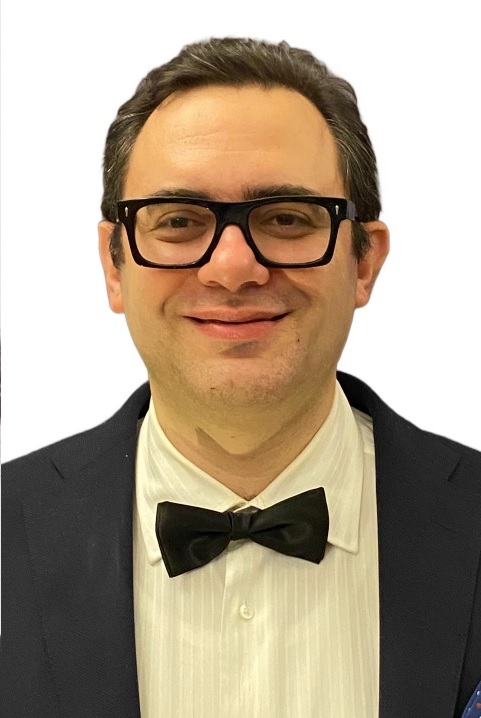
One of the projects selected for funding under this call is NEST – Neuro-symbolic Ethical Safe Traffic, which will be implemented with the involvement of researchers from TU Wien and has been awarded a EUR 1 million research grant. Professor Ezio Bartocci will serve as project coordinator, leading a consortium of academic and industrial partners comprising TU Wien (Agata Ciabattoni, Martin Tappler, Ezio Bartocci), the Austrian Institute of Technology (AIT) (Dejan Nickovic, Alessio Gambi), and Kapsch TrafficCom AG – Intelligent Traffic & Toll Solutions. The consortium combines complementary expertise across the innovation value chain, bringing together strengths in formal methods and artificial intelligence with deployment-oriented validation and pilot use cases to ensure practical relevance and applicability in real-world settings.
The NEST project addresses a central challenge of modern urban mobility: how to design traffic control systems that are not only efficient, but also fair, ethical, and transparent for all road users, including pedestrians, cyclists, public transport, and vehicles. Existing traffic control solutions are largely based on static models and manual tuning, which limits their ability to respond to dynamic traffic conditions, adequately account for vulnerable users, and scale efficiently in real-world deployments.
NEST proposes a neuro-symbolic traffic control approach that integrates learning-based methods with symbolic normative reasoning. The project aims to develop traffic control systems that are adaptive and high-performing through reinforcement and imitation learning, ethically grounded through formal representations of norms and fairness constraints, and transparent and explainable through verifiable, human-interpretable models. By combining Hybrid AI, generative AI, and search-based software engineering, NEST will generate rich, norm-relevant urban traffic scenarios using the SUMO simulation framework and investigate large language model (LLM)-based methods for translating natural-language normative requirements into formal logic.
The expected outcomes of NEST include a neuro-symbolic toolchain for synthesising trustworthy and norm-compliant traffic controllers, a novel simulation environment for complex and ethically relevant urban traffic scenarios, and AI-assisted methods that support developers in both scenario generation and the formalisation of normative requirements.
NEST is strategically aligned with major national and European AI initiatives, including the FWF Cluster of Excellence Bilateral AI, AI Factories at AIT, and large-scale computational infrastructures such as the Vienna Scientific Cluster and the AIT AI Cluster, supporting scalability, reproducibility, and sustainable impact.