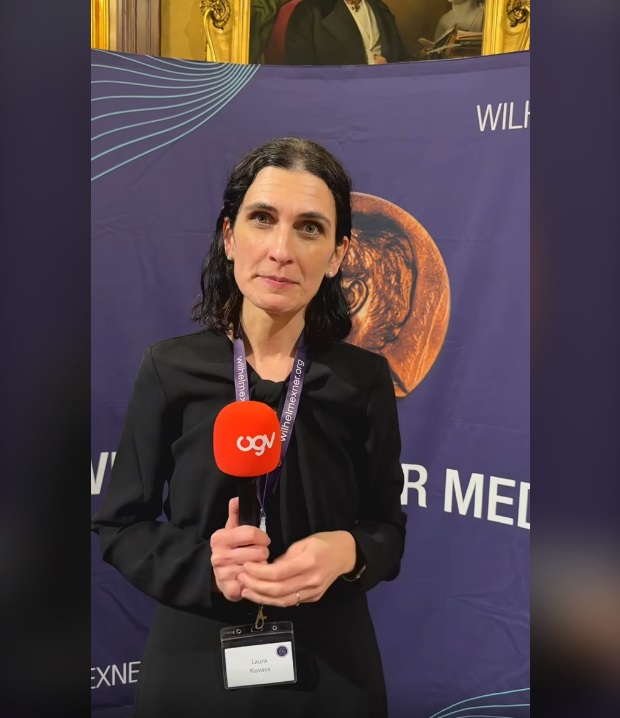
Automated Reasoning for Reliable IT Systems
The Wilhelm Exner Medaillen Stiftung is an Austrian foundation that awards the Wilhelm Exner Medal to outstanding scientists and innovators whose achievements have had a significant impact on the economy and society. Established by the Austrian Trade Association, the foundation promotes the link between science, research, and industry by recognizing excellence in applied scientific work. In connection with the medal, the foundation organizes the Exner Lectures, a distinguished lecture series that brings together leading international experts to present and discuss cutting-edge research and its societal and technological implications.
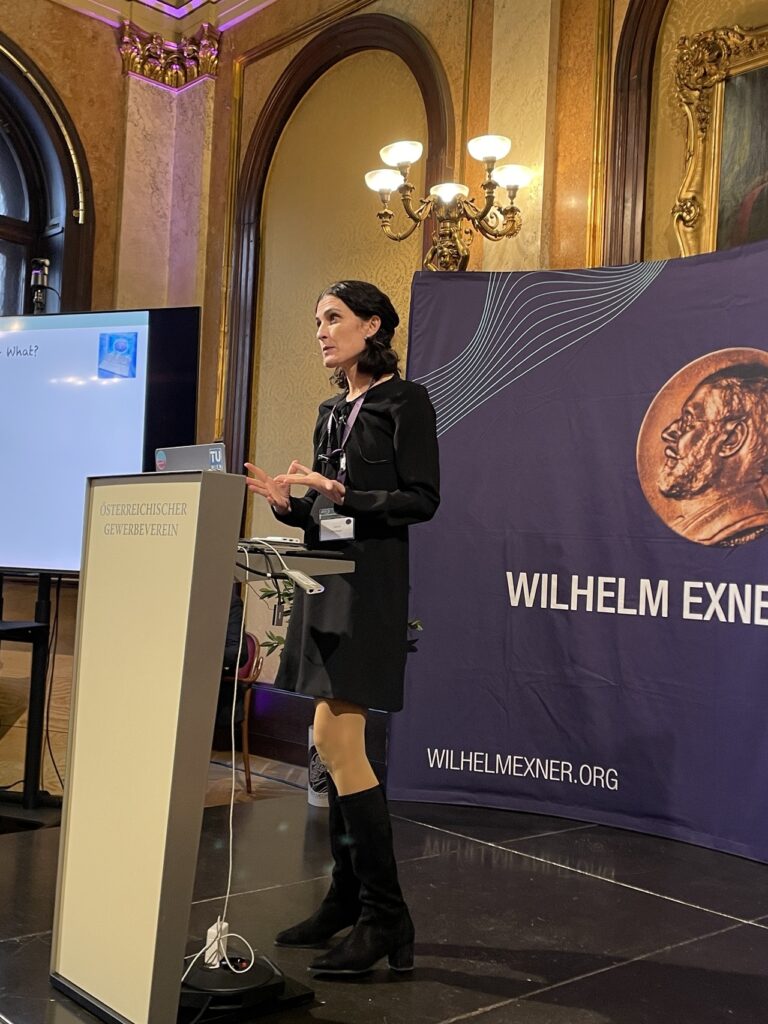
Laura Kovacs delivered one of the Exner Lectures 2025, dedicated to Sepp Hochreiter, a pioneering figure in artificial intelligence whose groundbreaking work has shaped the field. In her talk, “Automated Reasoning for Reliable IT Systems,” she examined the increasing reliance of everyday activities such as online banking, mobile communication, air traffic management, and prompt engineering on highly complex computer systems. As these systems continue to grow in scale and functionality, so do the risks of software errors and security vulnerabilities, underscoring the need for rigorous methods to ensure their reliability.
The lecture highlighted formal automated reasoning as a foundational area of AI and a key technological investment for ensuring system reliability and security. Kovacs presented recent advances in automated reasoning and demonstrated their applications in planning, code safety, and cybersecurity.
The research underpinning this work has been supported by major competitive funding, including an ERC Starting Grant (2020), a WWTF ICT Grant (2022), an Amazon Research Award (2023), and an ERC Proof of Concept Grant (2024).
In her interview, Laura also presents a practical and forward-looking approach centered on the certification of trustworthy AI systems. She points out that one of the main challenges is explaining AI hallucinations in language that is clear and accessible to non-technical audiences. To make this phenomenon more tangible, she and her team often use a simple game to illustrate how such errors can occur.